Cowichan decision is ‘rock solid law’, won’t affect private landowners, UBC expert says
A new UBC analysis says the Cowichan decision is grounded in solid law and does not threaten private landowners, outlining pathways for fair, forward-looking solutions.
The recent Cowichan decision was ‘rock solid law’ and concerns about effects on private property are unfounded, according to a new UBC paper.
In this Q&A, author James Hickling, adjunct professor in the Peter A. Allard School of Law, discusses the evidence in the case and identifies ways to move forward that benefit everyone.
What did the B.C. Supreme Court decide?
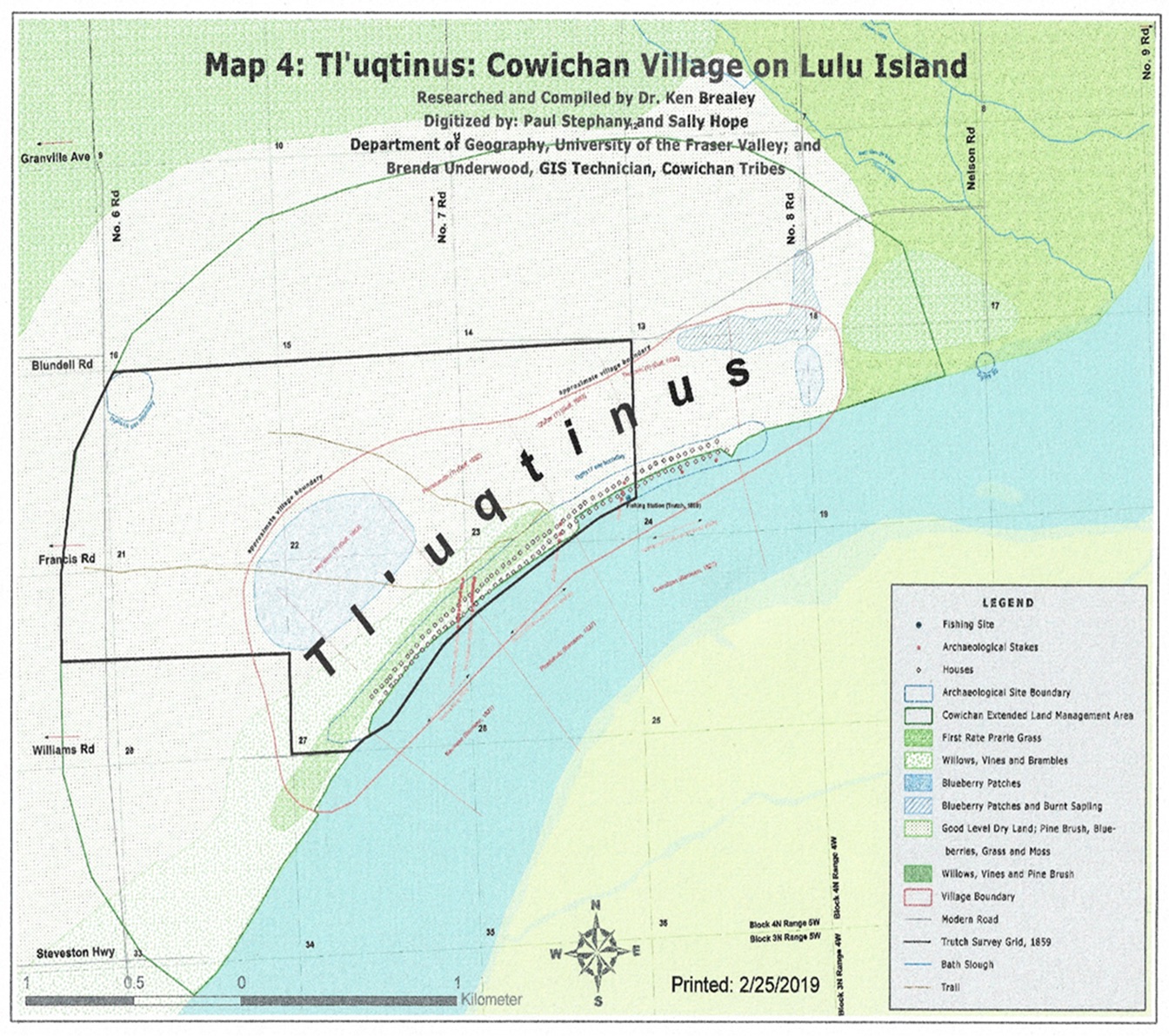
The judge made two key findings of fact. First, historical records confirm that long before Europeans arrived there was a large and permanent Cowichan settlement on the south arm of the Fraser River. Second, colonial and government officials were tasked with reserving those settlement lands for Cowichan but instead illegally claimed them for their own private benefit and disguised their involvement in this land speculation.
The judge applied the relevant legal and constitutional principles to the facts, finding that the Crown’s original decision to grant private ownership, or ‘fee simple title’ to those corrupt government officials was an infringement of Cowichan’s Aboriginal title. The judge concluded that the Crown now has a duty to negotiate in good faith with Cowichan to find solutions.
What does this mean for private landowners?
For private landowners, the status quo continues. The Cowichan decision does not put private property at risk in Richmond or elsewhere in British Columbia.
It is wrong for pundits to stoke fear by suggesting that somehow First Nations are coming to invalidate fee simple titles. The opposite is true. The Court found that Cowichan tailored the remedies they were seeking to focus on government-to-government relationships and avoid impacts on third parties.
Will a settlement with Cowichan be costly for governments?
No. Governments will certainly have to pay some costs, but the Crown and Cowichan can resolve the infringement of Cowichan rights in ways that are economically efficient and provide benefits for everyone. Solutions could include a combination of cash compensation, replacement lands, business and investment opportunities, and other positive outcomes.
For example, in 2008, the government settled a similar claim with Musqueam for $20 million and four parcels of land, for a total cost of about $70 million. Musqueam has since used that settlement to invest in businesses and much needed housing developments adjacent to UBC and in Richmond.
In fact, the costs to settle claims with First Nations are very small compared to the enormous amounts of public funds that B.C. and Canada routinely give to corporations in the form of grants and subsidies.
What might a solution look like?
There are other examples of win-win solutions in cases like Cowichan. For instance, in the Kits Point case 25 years ago, the judge decided that the lands near the Burrard Street Bridge should be held in trust by Canada for the use and benefit of the Squamish First Nation. And the sky did not fall. Vancouver did not sink into the sea.
Instead, the Kits Point decision provided a framework for the Squamish Nation, B.C., Canada, and the City of Vancouver to collaborate on forward-thinking, win-win solutions. Today, the Nation is building almost 6,000 new rental and affordable housing units in partnership with CMHC and the pension plan of the Ontario Public Service Employees Union.
Will we start to see many similar cases?
Regrettably, there are other examples in B.C.’s history of the same kinds of unlawful and fraudulent takings of land and resources from First Nations. So, yes, we’re likely to see more such cases, including the claim recently filed by the Dzawada’enuxw Nation.
However, an avalanche of successful Aboriginal title claims is very unlikely and reports otherwise create a storm in a tea cup. First, it is very difficult to prove Aboriginal title and these types of cases take years to come forward. Second, the Crown and First Nations are already finding solutions by negotiating treaties and similar agreements. Third, most cases of government wrongdoing are resolved through separate negotiations under the federal government’s specific claims policy.
But where the Crown refuses to negotiate, as it did in Cowichan, First Nations can also bring their claims to the courts, just like any other citizen or organization. We should welcome this. The courts apply strict tests and this results in outcomes that make our society more fair and just. This part of the reconciliation process is consistent with Canadian values and with the purpose and promise of our constitutional democracy.
For the full article on UBC News, click below.